
SIGforum.com Main Page The Lounge No more rank insignia on military chaplain uniforms: What do active duty military and vets think?
Main Page The Lounge No more rank insignia on military chaplain uniforms: What do active duty military and vets think?Go | New | Find | Notify | Tools | Reply | |
Political Cynic |
Not having a grade insignia could be interpreted as putting them on an equal footing with anyone they may be ministering to No issues with grade intimidation getting in the way. | |||
|
always with a hat or sunscreen |
As a military retiree I'm liking this move by SECWAR. Certifiable member of the gun toting, septuagenarian, bucket list workin', crazed retiree, bald is beautiful club! USN (RET), COTEP #192 | |||
|
A Grateful American |
I would rather they all be Corporal-Captains... "the meaning of life, is to give life meaning" ✡ Ani Yehudi אני יהודי Le'olam lo shuv לעולם לא עוד | |||
|
| Member |
The Army definitely thinks differently! As a long time Army medical officer, the position of the Army has been in a group of personnel the “ special staff” officers like medical and chaplain do not lead formations outside their specialty- if for example as I did many times, a medical officer or chaplain regardless of rank accompanied a combat patrol, the highest ranking combat arms soldier was in charge. In a lot of cases that meant myself as a major for the purposes of that mission was subordinate to even an infantry E-7, if they were leading the patrol. Medical officers of course can be in a leadership position ( I was OIC of a medical section manning an aid station in Afghanistan) over medical assets. But the idea the highest ranking person is always in charge is definitely not how things work on the Army side | |||
|
| Freethinker |
Thanks for the comments thus far. This it something else I’m curious about:
How does “ministry” differ from something like counseling? I believe I can think of some ways because I believe I know what counseling involves, but how would you describe ministry? And not only that, but “in recent years”? When I was a military brat in the early 1960s I often heard the expression, “Don’t like it? Talk to the chaplain.” A few years later in Basic, it was a chaplain who tried to explain to us recruits why the tradition of saluting was important. (A rather unusual, but clever explanation that I remember to this day.) That wasn’t about them handing out the Eucharist on Sundays. “ One may protest against evil; it can be exposed and, if need be, prevented by use of force. … Against stupidity we are defenseless. … [R]easons fall on deaf ears; facts that contradict one's prejudgment simply need not be believed … and when facts are irrefutable they are just pushed aside ….” — Dietrich Bonhoeffer | |||
|
Member |
In the Navy at least, Chaps are overburdened with mental health visits. They are the first line due to long wait times for appointment with overburdened clinical psychologists and psychiatrists. Chaps winds up being a nurse who talks to you and diagnoses you or refers you instead of a chaplain. Counseling is great when it’s marriage counseling, or personal counseling. But most often it’s psychiatric counseling chaplains are doing. At least in the Navy. Eight years to retirement! Just waiting! | |||
|
Member |
Retired USAF LtCol (O-5), and it bothers me not in the least. I’m sure the younger Chaplains will render a salute as required, but if they’re older looking pop one. If they don’t out rank you, so what. They have a tough job. NRA Life Member "Do what you can, with what you have, where you are." Teddy Roosevelt | |||
|
| Freethinker |
Yes, and a salute should always be returned regardless of the ranks involved. “ One may protest against evil; it can be exposed and, if need be, prevented by use of force. … Against stupidity we are defenseless. … [R]easons fall on deaf ears; facts that contradict one's prejudgment simply need not be believed … and when facts are irrefutable they are just pushed aside ….” — Dietrich Bonhoeffer | |||
|
אַרְיֵה |
Thread drift: I wasn't sure about this "rank", so I asked Google. The reply gave me the correct reference to *M*A*S*H*, but the AI answer also gave this misinformation: "In the Navy, a Lieutenant Commander is above a Captain." Unless things have changed since I was active duty Navy, Lieutenant Commander is O-4; Captain is O-6. הרחפת שלי מלאה בצלופחים | |||
|
| Freethinker |
Yet another example of an incorrect AI response. “ One may protest against evil; it can be exposed and, if need be, prevented by use of force. … Against stupidity we are defenseless. … [R]easons fall on deaf ears; facts that contradict one's prejudgment simply need not be believed … and when facts are irrefutable they are just pushed aside ….” — Dietrich Bonhoeffer | |||
|
| Member |
captain I am glad you said it because every time I read it I started to post. lol In the Navy (and honestly the AF too I’m sure) dr’s aren’t in charge of anything that is a warfare designated unit. Commanding a “team” is one thing, commanding an actual combat unit is a whole other animal. If you don’t have a warfare specialty you aren’t commanding a combat unit whether it’s an airplane, ship, sub whatever.This message has been edited. Last edited by: pedropcola, | |||
|
| Avoiding slam fires  |
As a young sailor on a heavy cruiser and having to do side boy duty I had to along with other side boy 's had to go to the dock in japan to retrieve out drunk Chaplin ,he did it all the time with others.full navy captain. Had we lowly seaman would get captain mass for that shi* Finally some standards for officers. | |||
|
| A Grateful American |
True, when the Lt. Commander is overflying the Air boss. I'll see myself out now... "the meaning of life, is to give life meaning" ✡ Ani Yehudi אני יהודי Le'olam lo shuv לעולם לא עוד | |||
|
| אַרְיֵה |
Go stand in the corner and look ashamed. No banana for you tonight. הרחפת שלי מלאה בצלופחים | |||
|
| The Ice Cream Man |
So, as my completely non-military, but Christian take on it…. I think there maybe need to be two different things. I can, definitely, see men called to minister to soldiers in times of conflict, but I think it would be very challenging to be one in furtherance of a combat goal. No Christian can ever want to destroy the enemy. We may have to kill, and we are permitted to do so, in dire necessity - but it is always, at least slightly, a failure that we had to kill instead of helping them find Christ. I think to have been a chaplain during the Obama admin, especially for SF etc must have been quite challenging. BS-3595-C401. In Theory, this will be the "seal" verifying that I am an attorney, and when I was licensed/the authority was last contacted, and confirmed it to be active. | |||
|
| The Ice Cream Man |
Or say in WWI, which was utterly without legitimate point. BS-3595-C401. In Theory, this will be the "seal" verifying that I am an attorney, and when I was licensed/the authority was last contacted, and confirmed it to be active. | |||
|
| Freethinker |
Many historians would agree with this: “The First World War was a tragic and unnecessary conflict.” — John Keegan, The First World War (New York: Alfred A. Knopf, 1999) But just as Iran has been waging war, overtly and covertly, against the US since 1979, the Germans conducted hostile military actions against the US prior to our entry into World War I. That included massive sabotage efforts and even biological warfare in the form of introducing anthrax and glanders into the country. When someone attacks you, it’s appropriate to attack them back. Unnecessary or not, if anything once the war was being fought our entry would have been justified well before Wilson evidently decided that enough was enough. “ One may protest against evil; it can be exposed and, if need be, prevented by use of force. … Against stupidity we are defenseless. … [R]easons fall on deaf ears; facts that contradict one's prejudgment simply need not be believed … and when facts are irrefutable they are just pushed aside ….” — Dietrich Bonhoeffer | |||
|
| Get my pies outta the oven!  |
It was better when the Chaplains had the Army officer rank on one collar and the Cross/Star of David/Etc insignia on the other collar. I guess with the move to that dumb chest rank position they dropped the Chaplain insignia and that's where the issue lies This is how they used to look which IMO was good: 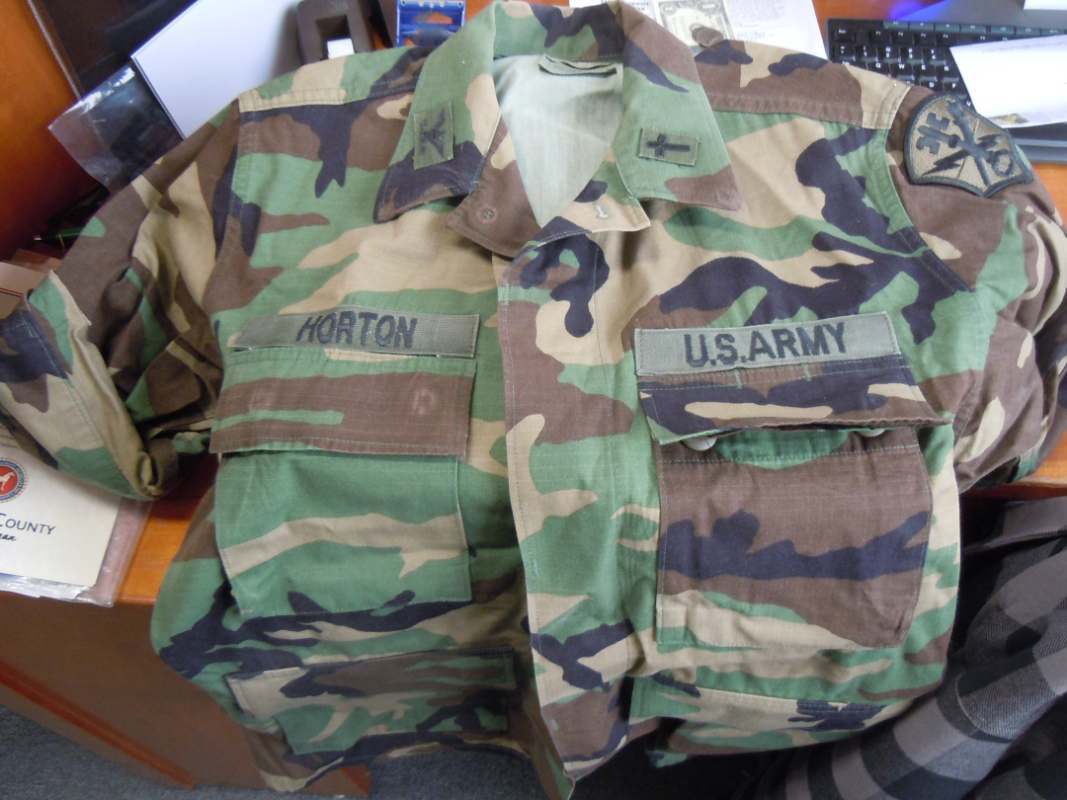 | |||
|
| Freethinker |
Hmm ...; good point. The chest insignia was after my time. “ One may protest against evil; it can be exposed and, if need be, prevented by use of force. … Against stupidity we are defenseless. … [R]easons fall on deaf ears; facts that contradict one's prejudgment simply need not be believed … and when facts are irrefutable they are just pushed aside ….” — Dietrich Bonhoeffer | |||
|
| Get my pies outta the oven! |
I don't think you quite understand what a military Chaplain is or does then. Not sure about the other services, but US Army Chaplains do not carry weapons. | |||
|
| Powered by Social Strata | Page 1 2 3 |
 | Please Wait. Your request is being processed... |
|
SIGforum.com Main Page The Lounge No more rank insignia on military chaplain uniforms: What do active duty military and vets think?
Main Page The Lounge No more rank insignia on military chaplain uniforms: What do active duty military and vets think?© SIGforum 2026