"I’m not going to read Time Magazine, I’m not going to read Newsweek, I’m not going to read any of these magazines; I mean, because they have too much to lose by printing the truth"- Bob Dylan, 1965
Posts: 19729 | Location: Texas | Registered: May 13, 2003
Originally posted by Johnny 3eagles: That's a funny skit!
It's not a skit. ChatGPT (and I assume other AIs) sometimes, if not often, get things wrong. And can be very stubborn about it. OpenAI will make corrections to fix some of these things, but they are funny when discovered.
I don't know if it still can't deal with it, but one interaction I saw was a user telling ChatGPT that he wanted to get his car washed. He stated that the carwash was only 100 feet away from his house, and asked if he should walk or drive. ChatGPT insisted that he should walk to the carwash.
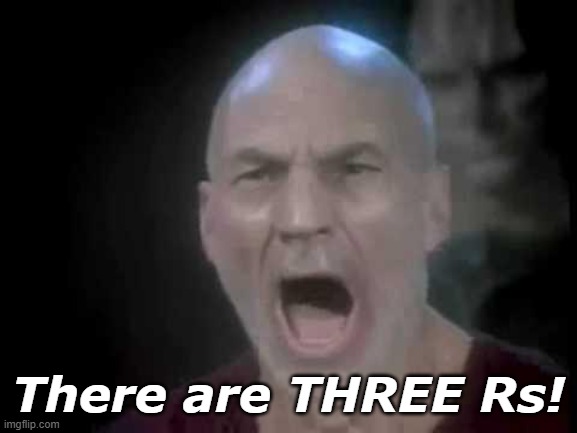
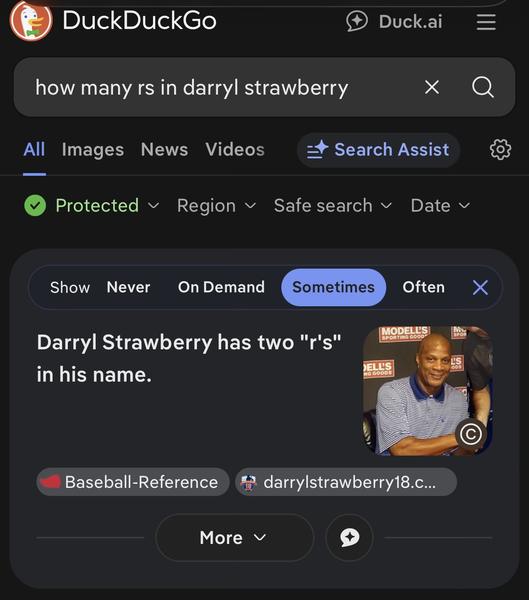
how many 'r's in the word strawberry. ChatGPT says there are 2 (two).
Thought for 2s
There are 3 'r's in "strawberry".Let's break it down:S T R A W B E R R YPosition 3: R Position 8: R Position 9: R
→ Three in total. ChatGPT is wrong on this one (it’s a surprisingly common mistake — people often miss that double “rr” before the “y”). Correct answer: 3
drendean
Posts: 79 | Location: Bagdad, KY | Registered: January 14, 2011
On another note, in using Grok many times for 'fixing things', I've often caught it in mistakes - wrong part number lookups, etc. It almost unfailingly apologizes and does a deeper dive confirming what I have pointed out...
We've got to use these things with a 'some wisdom' in these early days of AI.
drendean
Posts: 79 | Location: Bagdad, KY | Registered: January 14, 2011
A researcher invented a fake eye condition called bixonimania, uploaded two obviously fraudulent papers about it to an academic server, and watched major AI systems present it as real medicine within weeks. The fake papers thanked Starfleet Academy, cited funding from the Professor Sideshow Bob Foundation and the University of Fellowship of the Ring, and stated mid-paper that the entire thing was made up. Google's Gemini told users it was caused by blue light. Perplexity cited its prevalence at one in 90,000 people.
ChatGPT advised users whether their symptoms matched. The fake research was then cited in a peer-reviewed journal that only retracted it after Nature contacted the publisher.